Damascene 0

01 — The collection

The confectionery house of Damascus. Six families, one accent, kept in flavour, method and form.

A LANGUAGE WRITTEN IN SWEETS.

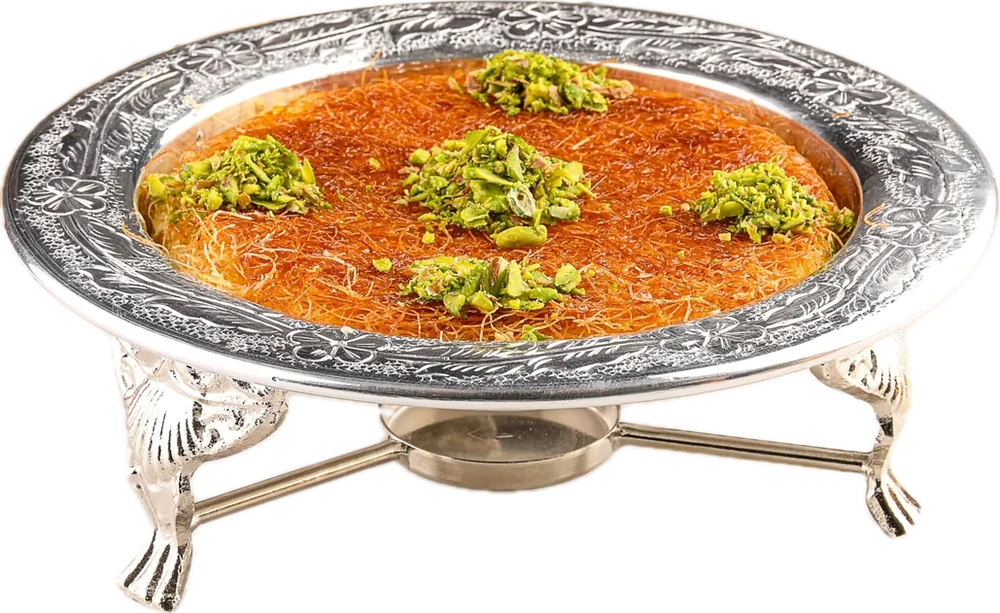
Knafeh on a footed stand, browned and turned once.
Knafeh
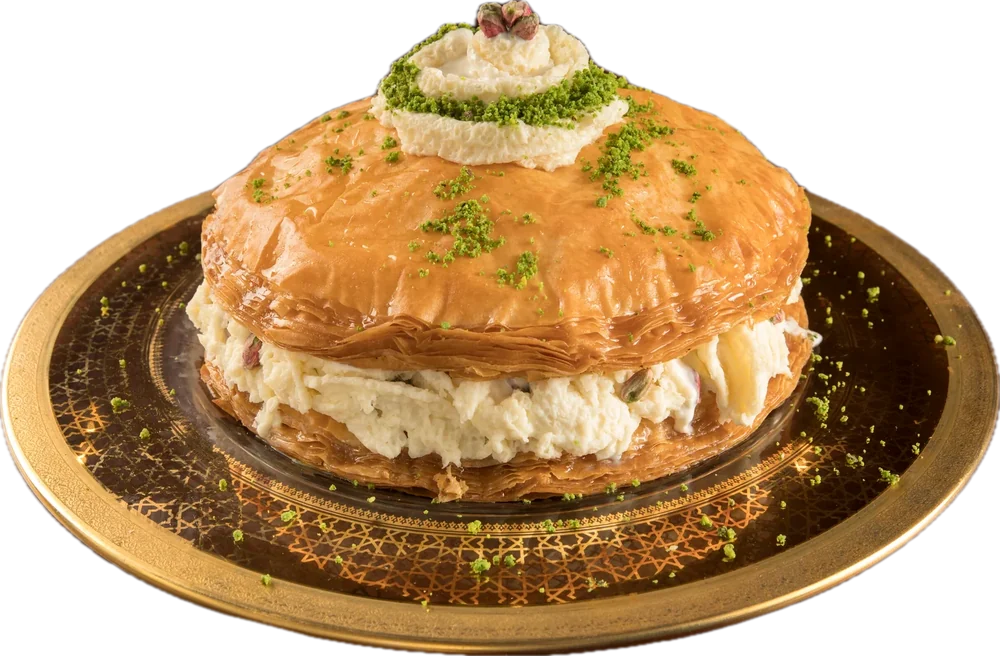
Layered pastry filled with clotted cream on a gilt openwork plate.
Qishta
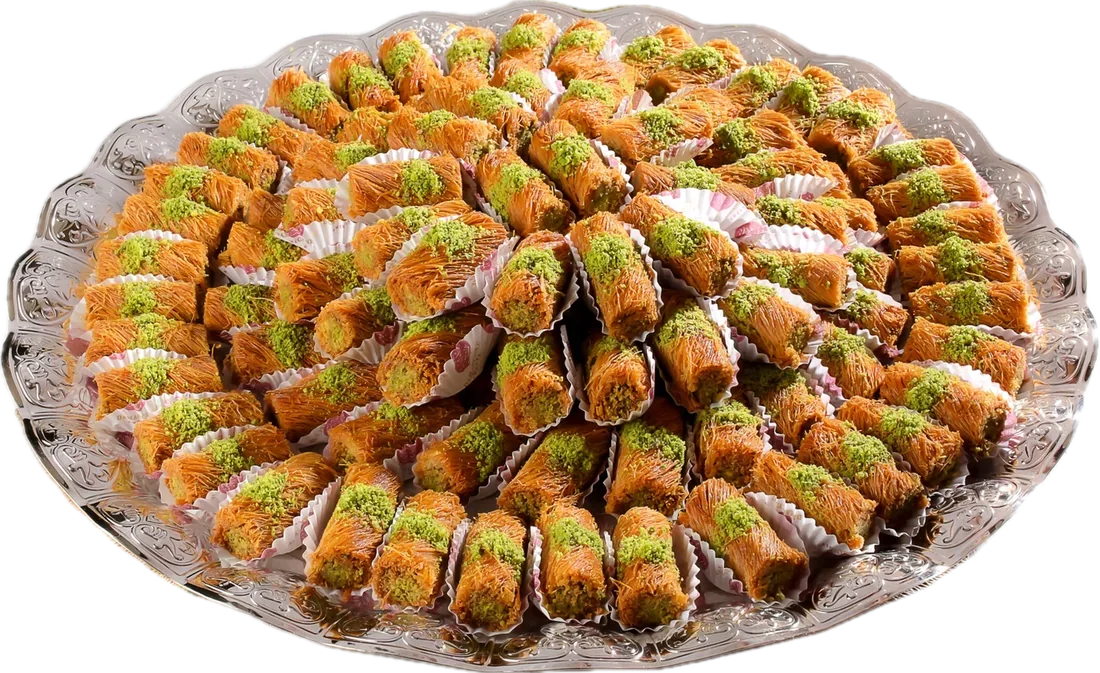
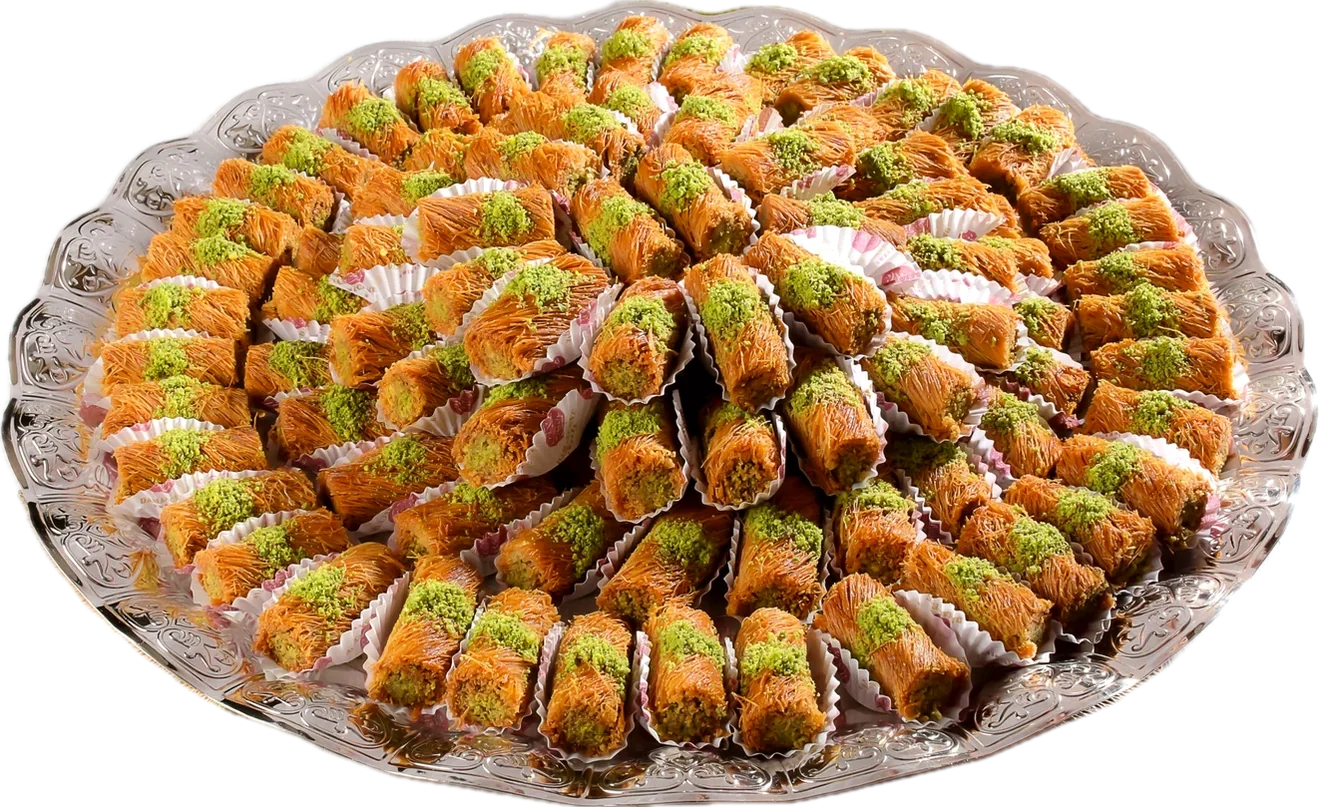
Mabroumeh set as a rosette on cut glass.
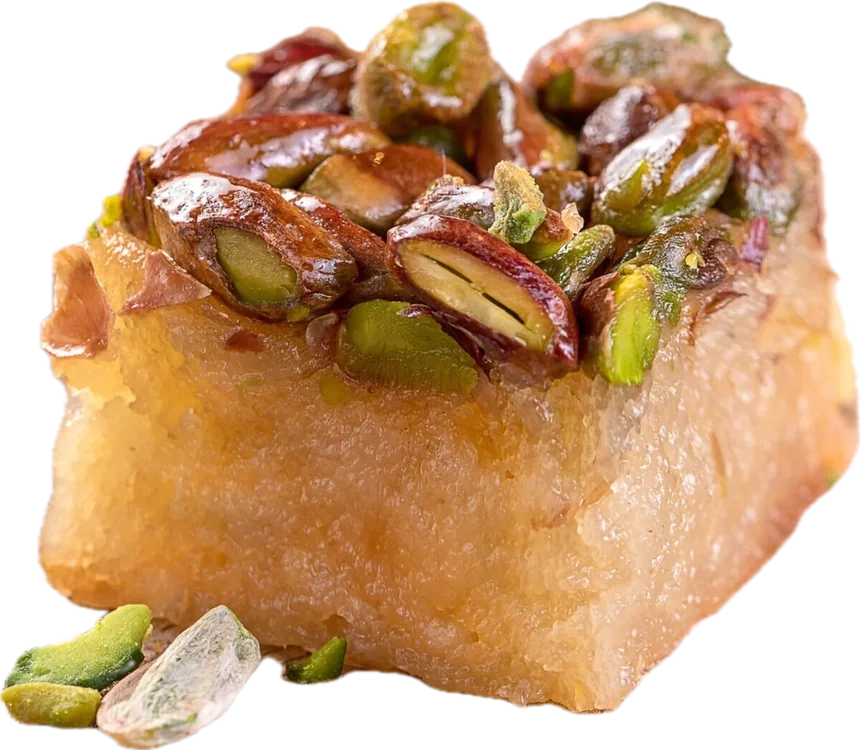
Baklava
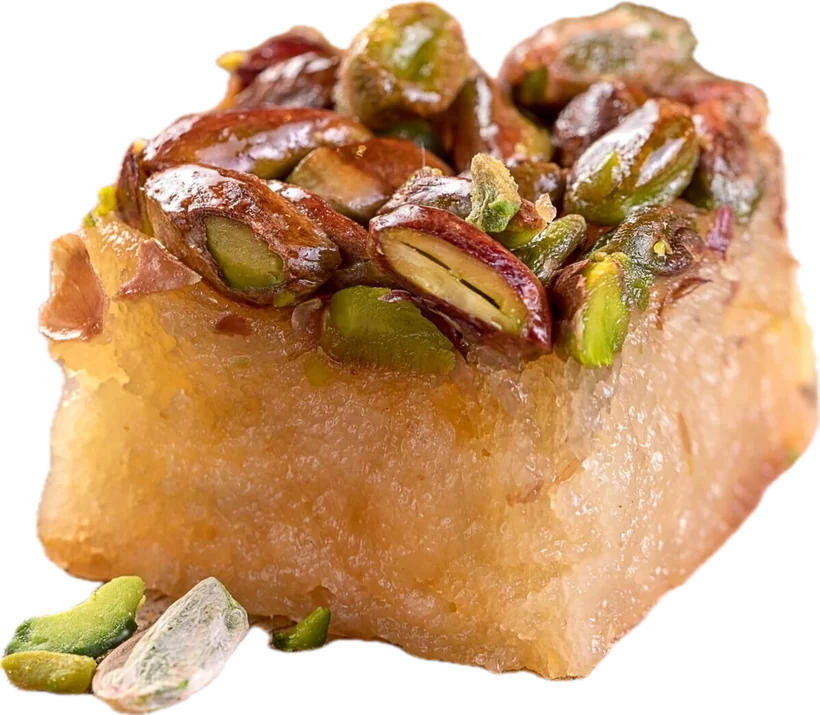
One harissa square, whole pistachio, dates.
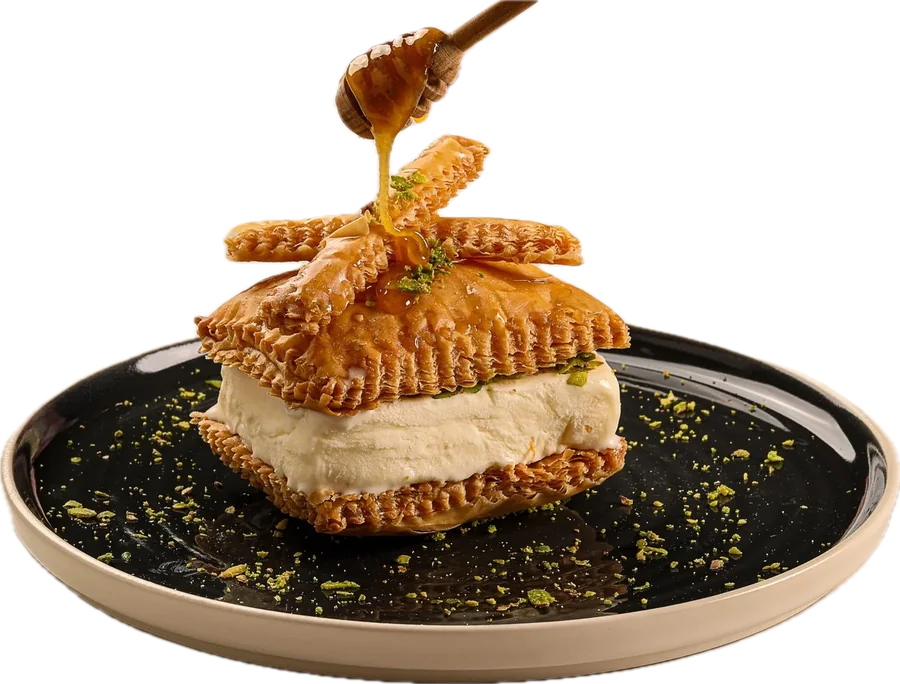
Booza

Shipping to Jordan and Saudi Arabia

Scroll

01 — The lexicon

SIX WORDS WE KEEP.

Damascus did not write its confectionery down. It repeated it — in method, in form, in the exact thickness of a sheet — until the sweets themselves became legible.

01/06 — drag or scroll

01

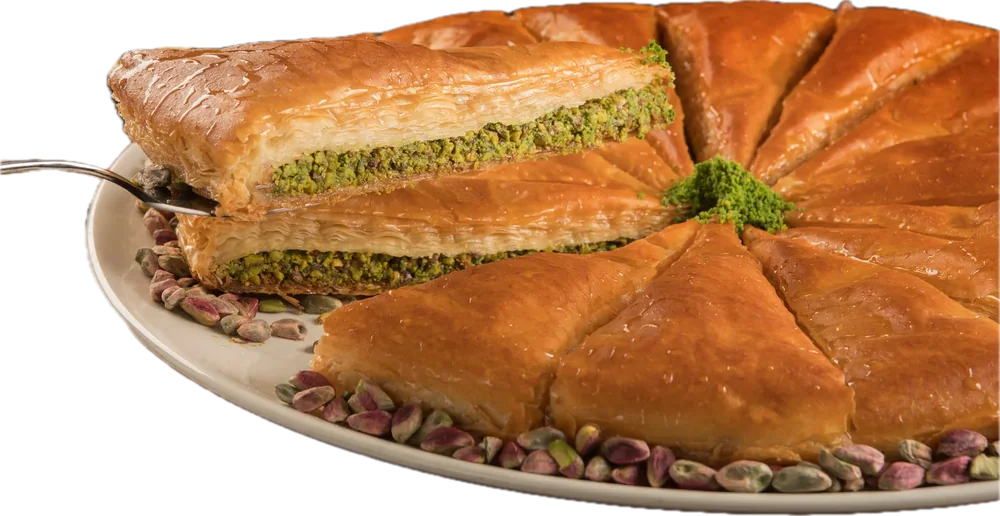
A round pistachio baklava cut into wedges on a plate, whole pistachios scattered around it.

Baklava

/bæk.lɑːˈwɑː/noun

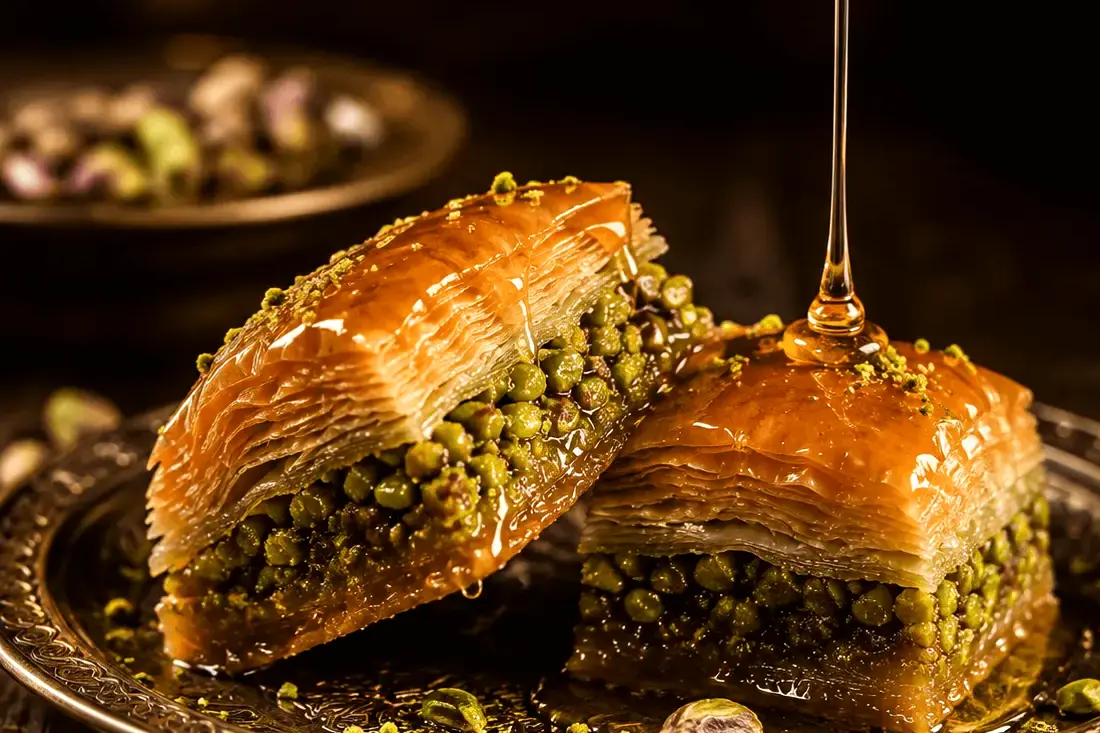
Filo drawn thin enough to read through, brushed with clarified butter, packed with halabi pistachio and cut on the diagonal before it ever sees the oven. Syruped while warm, so the layers drink and still crack.
02

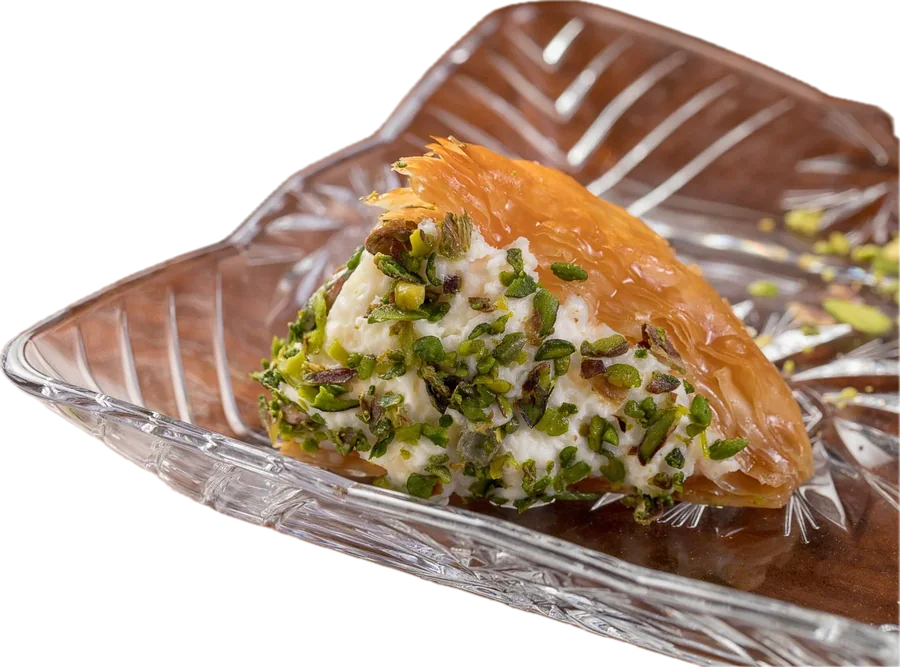
A single warbat pastry filled with clotted cream and crowned with chopped pistachio, on a cut-glass plate.

Qishta

/ˈqɪʃ.tɑ/noun

Clotted milk cream, set slowly and folded cold into warm pastry. The quietest thing in the case, and the one that tells you immediately whether a house is serious.

03

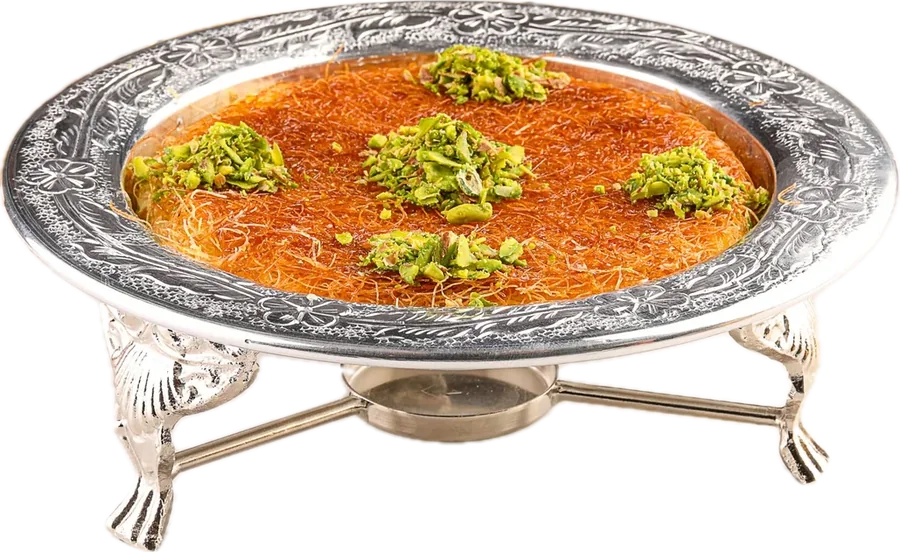
A round knafeh on a footed silver stand, topped with clusters of green pistachio.

Knafeh

/kəˈnɑː.feh/noun

Shredded or fine semolina pastry over cheese or cream, browned on the tray and turned exactly once. Eaten hot, often before noon, frequently standing up.

04

Mabroumeh rolls arranged as a spiral rosette on a scalloped glass platter.

Shamiyat

/ʃaː.miˈjaːt/plural noun

Literally: things of Sham — of Damascus. Ash al-Bulbul, Mabroumeh, Balloriyeh. The rolled and the coiled, named after the city that taught them to hold their shape.

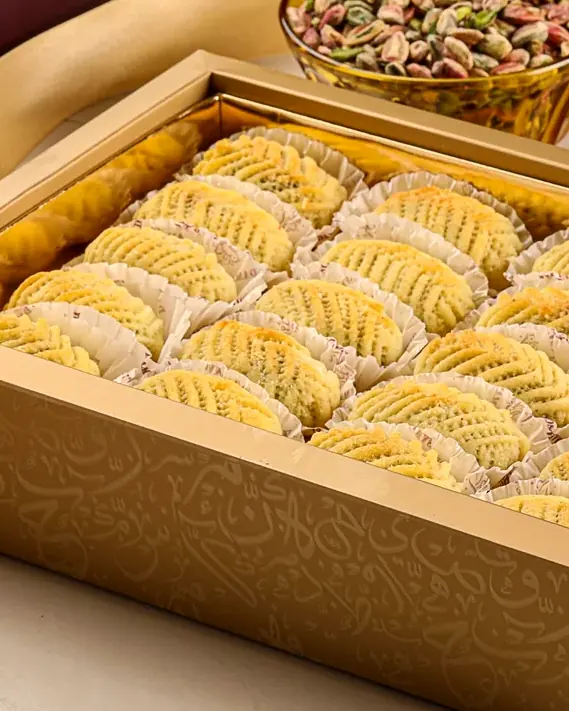
Rows of semolina maamoul, each pressed with a carved pattern.

05

Maamoul

/maʕˈmuːl/noun

Shortbread of semolina or flour, pressed into a carved wooden mould and filled with date, walnut or pistachio. The mould leaves a pattern; the pattern tells you what is inside before you break it.

06

Arabic ice cream pressed between two discs of pastry, with syrup being poured over it.

Booza

/ˈbuː.zɑ/noun

Stretched, not churned. Mastic and sahlab give it the pull; a coat of ground pistachio gives it the finish. Pounded in a chilled drum until it refuses to melt in a hurry.

Beyond the signatures

NAWASHIF · FROZEN · CHOCOLATE BAKLAVA · TURKISH BAKLAVA · FLOUR MAAMOUL · SEMOLINA MAAMOUL

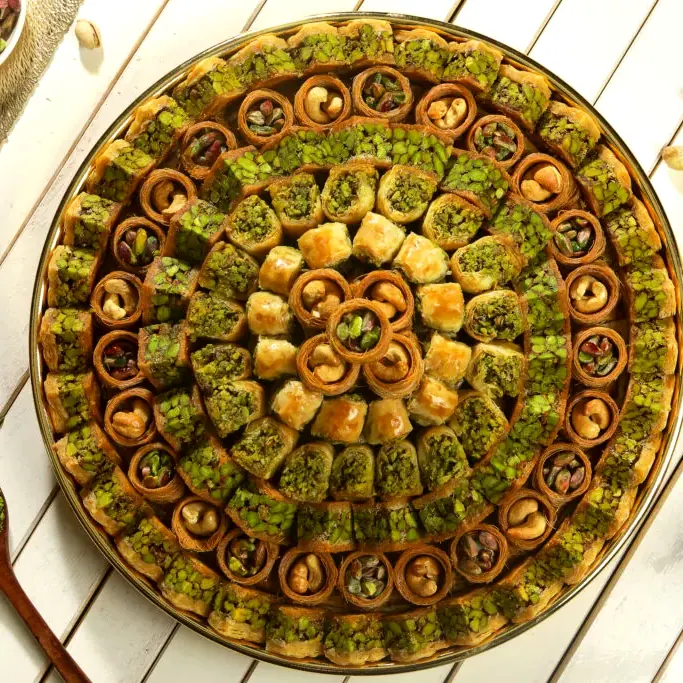
Fifteen families in the case. Six of them are here because they carry the accent most clearly.

02 — The making

temperatures

Two temperatures. Warm pastry, cold syrup — never both warm. That is the whole secret, and it is not a secret.

Pistachio
Halabi, coarse
Filo
Brushed, stacked, never pressed
Qatr
The syrup, poured cold

Cut edge · 1:1

03 — The artisan

THE CUT COMES BEFORE THE BAKE.

You cannot cut baklava once it is baked — the sheets shatter and the pistachio runs. So the tray is scored cold, in full, in one pass, by someone who has done it enough times not to measure.

Scored
before the oven
Baked
until the top plates lift
Syruped
at the turn of the temperature
Rested
until the layers stop moving
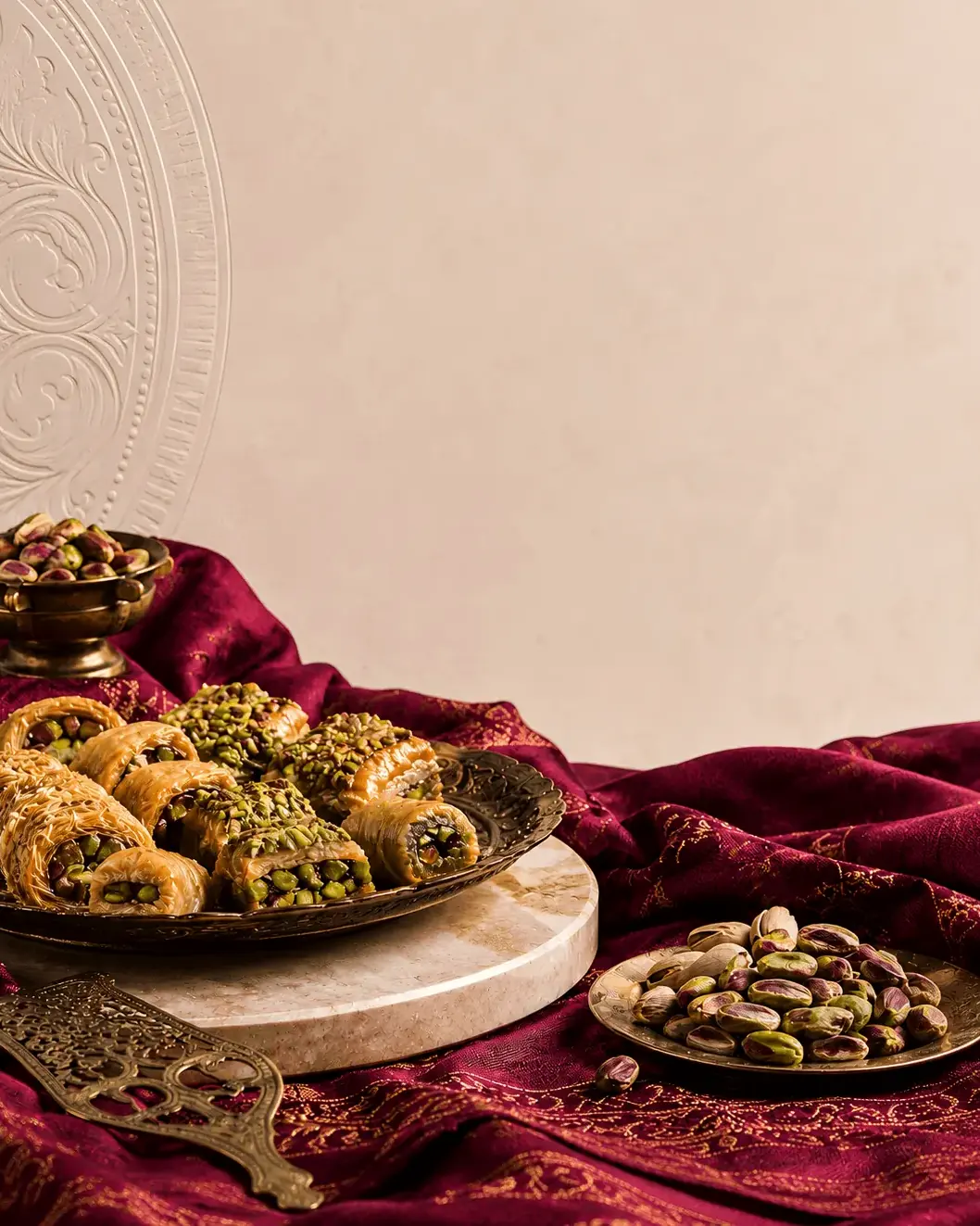
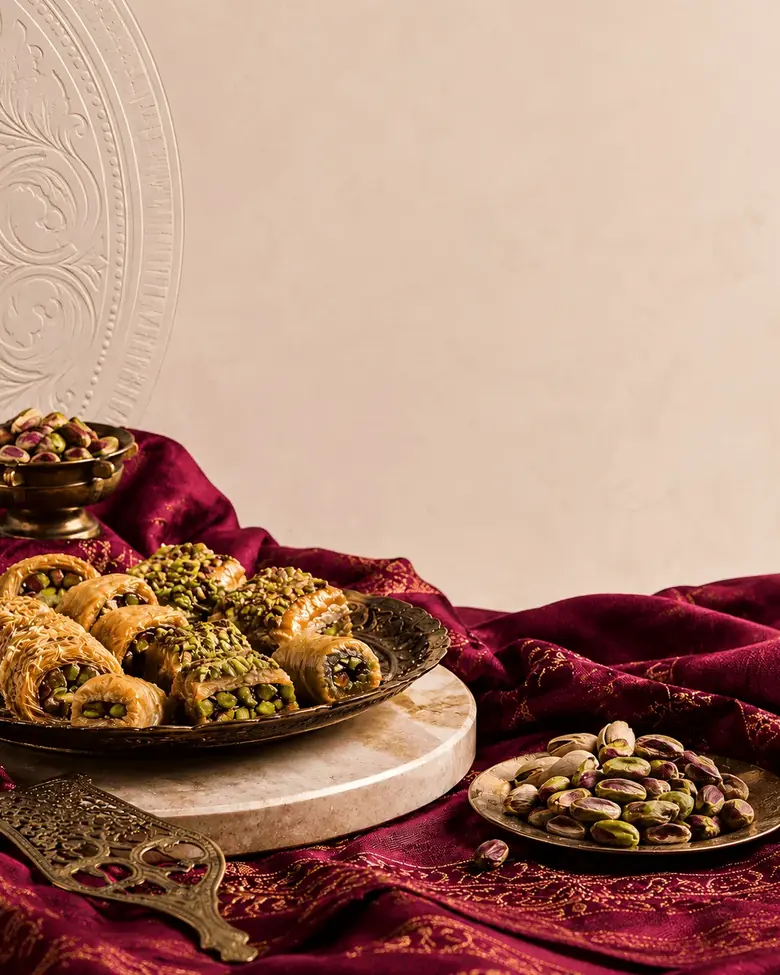
Rolled pistachio pastries on a brass plate against a sand-coloured wall carved with a damask relief, burgundy silk gathered beneath.

04 — The origin

TASTE BELONGS
TO PLACE.

Damascene takes its name from a city where sweets became a language of their own. Recipes, textures and techniques shaped over time gave Damascus a confectionery culture immediately recognised by those who know it.

We speak from within the culture,
not about it.

Rosa × damascena — the rose that carries the city's name, and the colour this house answers to. It is the only ornament we needed.

05 — The gift

A TASTE WORTH
BRINGING WITH YOU.

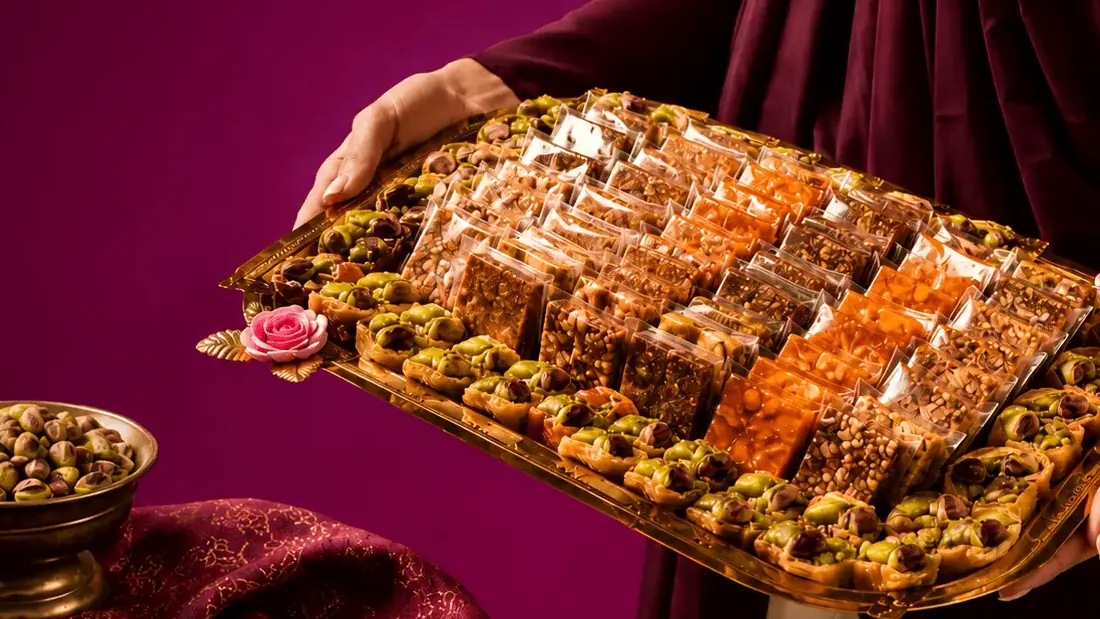
Thoughtfully composed, beautifully presented and rooted in the traditions of Damascus — each Damascene gift is made to mark a moment and leave an impression.

The art of giving, the Damascene way.

06 — The destination

Where will you taste Damascene?

Two stores, one house. Choose the one that ships to your table.